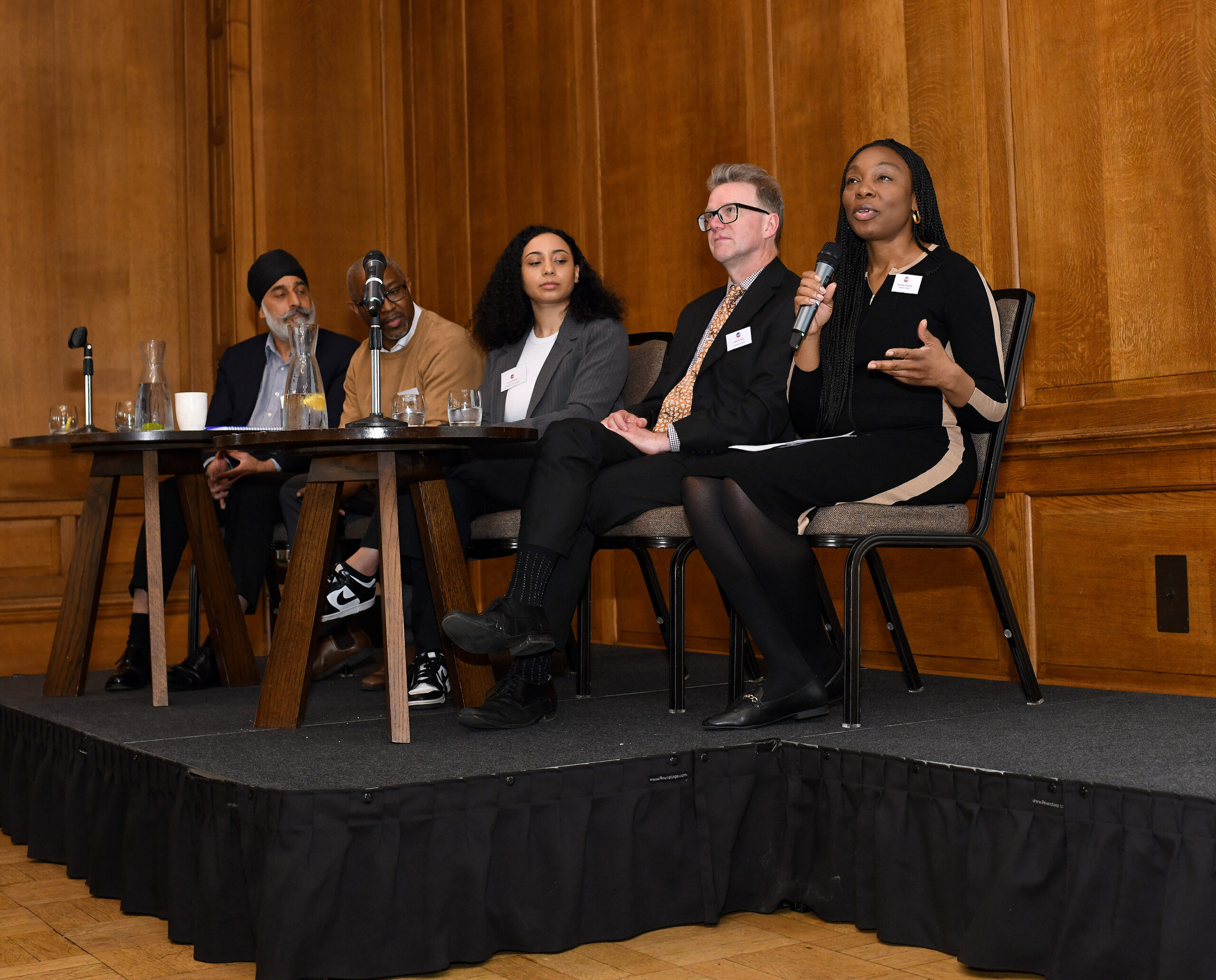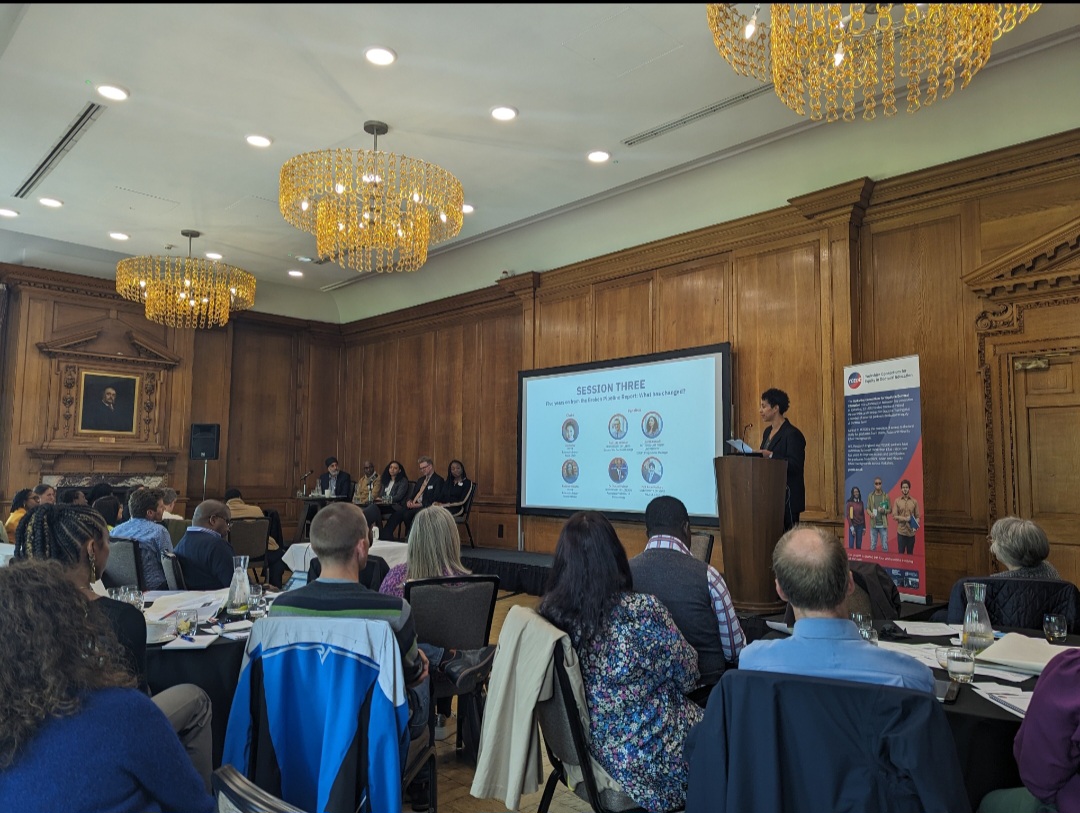
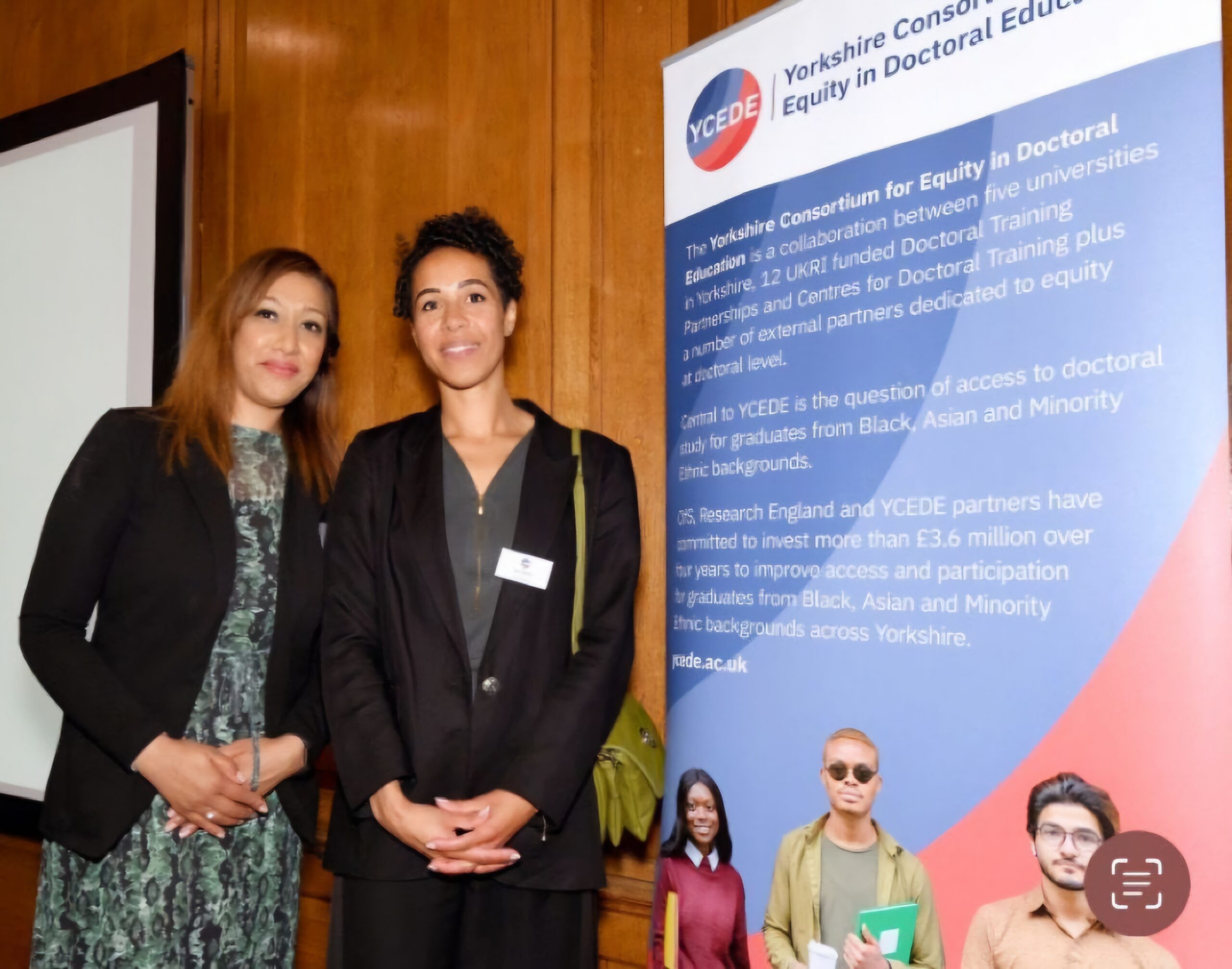
In 2024, I chaired a panel session at the Yorkshire Consortium for Equity in Doctoral Education workshop. The question we were asked to address was deceptively simple: five years on from the Broken Pipeline report, what has actually changed for Black doctoral researchers and academics in the UK?
The panel brought together Paulette Williams, founder of Leading Routes and co-author of the original Broken Pipeline report, alongside researchers, programme managers, and advocates who have been doing this work in the years since. It was a day of honest, sometimes difficult conversation. The kind that is only possible when the people in the room have stopped pretending that statements of intent are the same thing as outcomes.
What emerged was a picture that resists easy characterisation. There has been real progress in some areas: targeted doctoral funding schemes, changes to UKRI processes, increased public awareness, and a growing body of institutional practice that goes beyond diversity statements. But there has also been retrenchment, stagnation, and a coordinated political effort to roll back gains, driven by the same forces that have dismantled EDI infrastructure in the United States and are now making their presence felt in the UK.
This is an honest assessment of where we are. What has changed, what has not, what is under threat, and what it will take to make the progress that Black doctoral researchers and academics have been waiting for. I am writing this as someone who has spent over two decades working on race equity in higher education, health, science and engineering, and the voluntary sector, and who was in the room for the five-years-on conversation. The analysis here is evidence-based. But it is also personal. Behind every statistic is a person whose career, whose wellbeing, and whose relationship with British academia has been shaped by what this post is describing.
What the Broken Pipeline Report Found
The Broken Pipeline report was published in 2019 by Leading Routes, an initiative founded by Paulette Williams to prepare the next generation of Black academics. The report examined the link between the ethnicity degree awarding gap at undergraduate level and the experiences of Black students trying to access council-funded doctoral research.
What it found was stark. Of the 19,868 PhD studentships awarded by all UKRI research councils between 2016 and 2018, just 1.2 percent went to Black or Black Mixed students. Only 30 of those were from Black Caribbean backgrounds.
The report did not treat this as an anomaly. It treated it as evidence of systemic failure: structural racism operating at every stage of the doctoral funding pipeline, from undergraduate attainment gaps shaped by centuries of educational inequality, through informal networks and institutional biases that determine which candidates get recommended, to assessment criteria and panel compositions that determine who receives funding.
The Broken Pipeline also made specific, actionable recommendations. Ring-fence funding for Black doctoral researchers. Diversify PhD interview panels. Define academic excellence more broadly. Make application processes transparent. Create accountability mechanisms that prevent the same failures repeating year after year.
It was a landmark document. The question this post addresses is whether it was a turning point.
What Has Genuinely Improved Since 2019
Some things have changed. It would be dishonest to suggest otherwise, and it would be disrespectful to the people who worked hard to make those changes happen.
Targeted doctoral funding has become a reality.
One of the Broken Pipeline’s central recommendations was ring-fenced doctoral funding for Black researchers. This has happened, and at an increasing number of institutions. The University of Birmingham’s 125th Anniversary Scholarships for Black British Researchers, doctoral scholarships at Leeds, Manchester, and elsewhere, and UKRI’s own targeted funding initiatives have collectively opened pathways that did not exist before the report was published. For the individual researchers who have accessed these opportunities, it has been career-defining.
UKRI has taken steps to address structural bias.
In response to the Broken Pipeline and subsequent pressure from researchers, institutions, and advocacy organisations, UK Research and Innovation has introduced changes to its funding assessment processes. These include changes to referee requirements that previously disadvantaged Black applicants, and reviews of panel composition and assessment criteria across several research councils. Progress is uneven and the pace remains too slow. But the direction is positive.
Awareness and public discourse have been transformed.
In 2019, the Broken Pipeline report had to fight to be heard. By 2024, the barriers facing Black doctoral researchers are a recognised issue in the sector, covered by Times Higher Education, referenced in Advance HE publications, cited by the Office for Students, and debated in parliamentary education committees. That shift matters. It does not produce outcomes on its own. But it creates the conditions, the shared language and institutional permission, that make structural change more possible.
Data collection and transparency have improved.
Since 2019, there has been meaningful improvement in the collection and publication of disaggregated data on doctoral applications, awards, progression, and outcomes by race. More institutions are publishing their own workforce diversity data as a matter of course. This transparency is foundational. It makes it harder to claim ignorance, and it provides the evidence base for accountability.
Networks and communities have strengthened.
The five years since the Broken Pipeline have seen significant strengthening of the networks and advocacy organisations that support Black researchers. Leading Routes has grown. YCEDE has developed a national programme of work on equity in doctoral education. Black academics networks across the UK have become more visible, more connected, and more effective at generating both individual support and systemic pressure on institutions.
Progress since 2019 is real. Targeted funding, improved data, and strengthened advocacy have created conditions that did not exist before the Broken Pipeline was published. The question is whether these gains are sufficient, and whether they are safe.
What Has Not Changed
For all the genuine progress, the headline data tells a story that should prevent any complacency.
The proportion of UK professors who are Black remained at 1 percent in 2023/24, according to HESA. Up from 210 to 250 in absolute numbers, but still 1 percent of the professoriate. In a country where Black people make up approximately 4 percent of the population, this represents a fourfold underrepresentation at the most senior level of UK academia.
The doctoral funding gap has narrowed at the margins but has not closed. The supervisor relationship identified by the Broken Pipeline as a central site of structural disadvantage remains largely unreformed in most institutions. Mandatory anti-racism training for doctoral supervisors is still the exception rather than the norm. The curriculum decolonisation work that began with energy in 2020 has stalled in many departments, partly in response to political pressure and partly because institutional appetite for the harder dimensions of that work was always more limited than the public statements suggested.
The isolation experienced by Black doctoral researchers, being the only one in their department, their research group, their seminar cohort, has not been structurally addressed. You cannot solve isolation by changing how funding applications are assessed. You can only solve it by ensuring that enough Black researchers are present, supported, and progressing that no individual has to carry the entire weight of representation alone. We are not close to that yet.
The post-doctoral pipeline also remains broken. Black researchers who complete their PhDs continue to face disproportionate barriers to progression into academic roles. The pipeline that was broken at doctoral entry is also broken at the transition to academic employment. Both breaks need fixing for the representation gap to close.
The awarding gap persists.
Advance HE’s 2023 statistical report found that the ethnicity degree awarding gap had returned to pre-pandemic levels after appearing to narrow slightly in 2020/21. This matters because access to funded doctoral study is still heavily tied to undergraduate degree classification. Fixing the doctoral funding pipeline without fixing the awarding gap is treating a symptom without addressing the cause.
The New Threats: EDI Rollbacks and the Political Climate
Perhaps the most significant development since 2019 is one the Broken Pipeline could not have anticipated: a coordinated, well-resourced political effort to delegitimise, defund, and dismantle diversity, equity, and inclusion work across the anglophone world.
The rollback of DEI programmes in the United States under executive orders in 2025 has had direct ripple effects in the UK. It has emboldened critics of EDI work in higher education, generated media coverage that frames equity initiatives as ideological rather than evidence-based, and created institutional nervousness about the political risk of being seen as too committed to diversity. Several UK universities have quietly reduced their EDI staffing in 2024 and 2025. This is not a hypothetical threat. It is happening now.
The anti-EDI movement in the UK works primarily through media narrative, parliamentary debate, and the normalisation of a framing in which diversity initiatives are presented as unfair to white applicants or incompatible with meritocracy. Some institutions that were beginning to take meaningful steps on targeted doctoral funding have paused, waiting to see which way the political wind settles.
This is not a reason for despair. It is a reason for clarity. About what the evidence actually shows. About what institutions are legally required to do under the Equality Act 2010. And about the difference between political controversy around DEI and the documented, decades-long reality of structural racism in UK higher education. The evidence does not become less true because it is politically contested. And the human cost of inaction does not become less real because acting on it has become more uncomfortable.
The question is not whether race equity work is still necessary. The data answers that unambiguously. The question is whether institutions have the courage to pursue it in a political environment that has made courage less comfortable.
What Real Progress Actually Looks Like
One of the things that became clear in the YCEDE panel discussion was the need to be precise about what real progress means, as distinct from the activity that can be mistaken for it from a distance.
Real progress is not more diversity statements. UK higher education institutions have been publishing race equality statements for decades. The statements themselves have almost no causal relationship with the outcomes they describe. Real progress is measurable change in the representation, experience, and outcomes of Black researchers and academics, documented, tracked, and publicly reported.
Real progress is not training events. Anti-racism training, unconscious bias training, cultural awareness workshops: these have value when they are part of a sustained programme connected to institutional strategy and accountability. They have almost no value when delivered in isolation as evidence of commitment. The research on standalone diversity training is clear. It does not produce lasting behaviour change, and it can generate backlash that makes conditions worse.
Real progress is structural. It is the reform of doctoral application processes to remove the informal network advantage. It is mandatory, evaluated supervisor development that addresses racial bias. It is the disaggregated publication of doctoral outcomes by race with named institutional accountability. It is the targeted funding that has opened doors, sustained and expanded. It is the promotion and permanent hiring of Black academics at rates that begin to close the representation gap in the professoriate.
Real progress is also cultural. Cultural progress means Black doctoral researchers and academics experiencing their institution as a place where their presence is expected, their knowledge is valued, and their advancement is supported. Not as a place where they are tolerated and expected to do the additional labour of representing their entire community while completing their research.
The test of cultural progress is not what the institution says. It is what the Black researchers inside it experience.
What Universities and Employers Need to Do Now
Defend and expand targeted funding.
The most important thing institutions can do right now is not retreat from the targeted doctoral funding programmes that have opened pathways for Black researchers. The legal basis for positive action under the Equality Act 2010 is clear. The evidence for the need is unambiguous. Institutions that quietly discontinue these programmes in response to political pressure are choosing institutional comfort over the researchers whose careers depend on them.
Implement mandatory, evaluated supervisor training.
Voluntary supervisor training has been available in most UK universities for years. It does not reach the supervisors who most need it, because those supervisors do not self-select for development on the dimensions where their practice is most problematic. Mandatory, evaluated, and regularly repeated supervisor training on racial bias and anti-racism in academic mentoring is the minimum standard. And it needs to be connected to accountability, so that repeated failures with Black researchers have consequences.
Publish disaggregated data and act on it visibly.
Every institution should be publishing annually disaggregated data on doctoral applications, funding awards, progression, completion, and post-doctoral career destinations by race. This data should be presented to governing bodies, reviewed by senior leadership with named accountability, and published publicly. The institutions making the most progress treat this data not as a reputational risk to manage but as an accountability tool to use.
Address the awarding gap at undergraduate level.
Fixing the doctoral pipeline without fixing the undergraduate awarding gap is treating a symptom rather than a cause. Institutions need sustained, evidence-based interventions: mentoring programmes, inclusive curriculum reform, assessment equity reviews, and the development of inclusive teaching practice among academic staff, which is the single most evidence-supported intervention for closing awarding gaps.
Protect and resource the infrastructure of race equity work.
In the current political climate, the infrastructure of race equity work is under pressure. The EDI roles, the staff networks, the doctoral researcher communities, the data collection systems, the partnerships with organisations like Leading Routes and YCEDE. Institutions serious about race equity need to actively protect and resource this infrastructure, not quietly reduce it when it becomes politically convenient. The researchers whose careers depend on that infrastructure are watching. So are the prospective applicants deciding whether to trust an institution with their doctoral years.
How Bakare Barley Supports Universities and Organisations on Race Equity
At Bakare Barley, race equity is not a peripheral offering. It is at the core of what we do and why we do it. Our founder Ayo Barley has spent over two decades working with universities, research institutions, and other organisations to develop the strategies, the leadership capability, and the cultural conditions needed to make genuine, sustained progress.
Ayo’s role as Chair of the YCEDE External Advisory Board, her chairing of the five-years-on Broken Pipeline panel, and her long-standing engagement with the research and advocacy community mean that the support Bakare Barley offers is not generic EDI consultancy. It is informed by deep, current, practitioner knowledge of the specific challenges facing Black researchers and academics in UK higher education.
Race equity strategy development: We support universities and other organisations to develop evidence-based, ambitious race equity strategies that go beyond statements of intent to structural change. This includes reviewing doctoral and employment processes through a race equity lens, developing action plans with specific time-bound commitments, and creating accountability frameworks to track and report on progress.
Anti-racism training: Our training for higher education contexts is designed specifically for the academic environment, addressing how racism operates in supervisory relationships, seminar cultures, curriculum design, and assessment processes. It is evidence-based and designed to develop specific skills and accountability rather than simply raise awareness.
Inclusive leadership development: We develop the leadership capability of heads of department, deans, vice-chancellors, and the academic leaders who shape institutional culture, equipping them with the knowledge and skills needed to create environments where Black researchers and academics can genuinely thrive.
Training and facilitation for doctoral and professional services teams: We work with graduate schools, doctoral administrator teams, and professional services staff to develop their understanding of race equity in doctoral education and their capacity to provide genuinely inclusive support. Whether your institution is at the beginning of its race equity journey or seeking to accelerate progress already made, we welcome the conversation.
Five Years On: Still Not There, but Not Going Back
The Broken Pipeline asked UK higher education to look honestly at what was happening to Black doctoral researchers and to take responsibility for changing it. Five years on, the honest answer is: some things, meaningfully, at the margins. Not enough, at the centre. And some of the progress made is now under threat.
The targeted funding programmes that now exist did not exist before. The data that is now published was not being published before. The networks that now support Black doctoral researchers were not as strong or as institutionally visible before. These things matter. They represent the labour of individuals and organisations who refused to accept that the status quo was permanent. And they were right.
But the pace of change remains far too slow for the people living inside the system it is failing. The Black doctoral researcher who starts their PhD in 2026 should not have to wait another five years for their institution to decide it is ready to take their experience seriously. They deserve that seriousness now.
The question of what happens next is not primarily a question about data or policy or funding mechanisms, though all of those matter enormously. It is a question about institutional will. About whether the leaders of UK universities are willing to make the structural changes that the evidence demands, in a political environment that has made those changes more uncomfortable but no less necessary.
From everything I observed at the YCEDE panel and from everything I have seen in two decades of this work, I believe that will exists. It is not universal, and it is not always courageous. But it exists. The task now is to hold it accountable.
Ready to move from statements to structural change on race equity?
Bakare Barley works with universities, public sector organisations, and employers to develop evidence-based race equity strategies and anti-racism programmes that produce measurable outcomes. Book a free 30-minute consultation with Ayo Barley to begin the conversation.